Speaker for Tuesday 16th September 2014 - Ms. Rachel Bain
Talk by Rachel Bain on Biodiversity in the Coleraine Borough
Club Vice President John Graham, welcomed members to the meeting and then went on to introduce our speaker for the morning Ms. Rachel Bain, who is the Biodiversity Officer for Ballymoney, Coleraine & Moyle Councils. Rachel explained that her job is split over the four existing councils, thus covering a wide area, but at this meeting, she would be talking about Coleraine in particular.
Rachel started her talk by explaining just what 'Biodiversity' was - Very simply, biodiversity is the total variety of all living things. This includes people, plants, animals, fungi, micro-organisms, the habitats where they live and the ecosystem which they are part of. Biodiversity exists in many places from native oak woodland and coastal sand dunes, to places you least expect such as gardens and our many miles of roadside verges.
The biodiversity we see today is the result of millions of years of evolution, shaped by natural processes and, increasingly, by the influence of humans. Biodiversity is all around us, in our gardens, parks, woodlands, fields, mountains, lakes and rivers. It is easy to find but also easy to lose.
Rachel then took us through a short but very comprehensive look at, well, 'everything living' - the biodiversity - in the Coleraine area, starting with our 'woodlands'. In Coleraine we have fine mixed Ash woodlands and Oak woodlands, as well as 'wet woodlands' and 'species rich hedgerows' - all were nicely illustrated in the PowerPoint slide show. This led on to a look at woodland birds, bat and fungus.
Next we saw another major part of the Borough, the extensive 'farmland' and 'grassland'. The biodiversity of these is being protected and encouraged - the 'Do Not Cut' signs along the roadside are safeguarding a number of special species of plants and wildlife. The care and control of meadows has led to a small increase in the rare 'Irish Hare' .


Within the area we have 'Peatland'; 'Raised Bog'; Blanket Bog and 'Heathland'. The management of these has led to an increase in such diverse wildlife as 'Snipe', Dragon Flies' and Lizards'.
With the Bann running through the middle of Coleraine Borough, we have important 'wetlands' as well as river life to take care of. Salmon and Brown Trout can be seen in the Bann, while its banks house a population of Otters and the endangered 'Lapwing'.
The borough (and it's neighbours) can boast some of the most beautiful coastline in the UK. This gives a special challenge to our biodiversity as the influx of tourists and holiday makers can put extra stress on unique sand dune plants as well as the sand dunes themselves - which are also home to ducks, gulls, a few Peregrine Falcons and a very rare species of coastal moth.
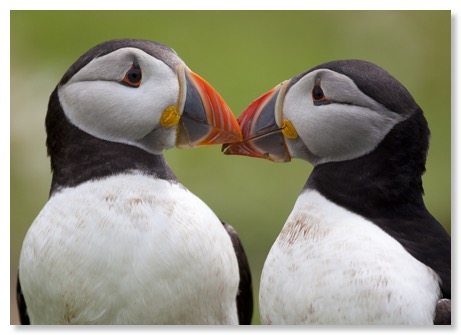
Linked to the coastal area, is the special Marine Environment of our area. We have important areas for 'Horse Mussels' and water plants. We also provide a home for 'Basking Sharks' (they are vegetarian, honest!), 'Common' and 'Grey' Seals, 'Puffins' and even 'Harbour Porpoises' (frequently seen off Castlerock!).

Finally, there are 'Gardens' and 'Urban Green Spaces' - here, our parks really do need more encouragement for 'living' species - the grass and flowers may look nice, but there's not enough insect and wildlife to be found. However, here is where all our club members can help with their own gardens. Planting Butterfly' and insect friendly flowers and shrubs, as well as adding a bird feeder or two, will have a knock-on benefit for all the area.
There was time for a short question and answer session at the end of Rachel's talk. Among these were: 'Why haven't I seen so many Butterflies this year?' - The early heat then the wet and cold August interrupted the development of the Butterfly, later September sun may balance things out!? 'Are Ladybirds disappearing?' - Yes, they are in serious decline, and it's mainly due to pesticides, which kill the Greenfly, which is the Ladybirds food supply. 'Do Seagulls attack people?' - They are scavengers and have learnt that picnic meals mean food is left afterwards, so they will try to get the food as soon as they see it, which makes it look like they are attacking if you are the one having a picnic. 'Is Wild Garlic taking over around Downhill?' - It will spread rapidly, but the biggest problem is Japanese Knotweed, which can be VERY expensive to get rid of, is VERY deep routing and can take 4 or 5 years of constant treatment to kill it off.
A vote of thanks was proposed by Dermot Jennings, who spoke for us all when he said how informative and enjoyable the talk was, in fact he (and possibly all the members?) just hadn't realised how much they have been missing! The thanks were passed on by the Vice President. The members showed their appreciation.
Mike Turner - Secretary
To find out more about Biodiversity in our area, click on this link: http://www.biodiversityni.com.gridhosted.co.uk
