Speaker for 1st November 2016
Coleraine Probus and the Easter Rising
Coleraine Probus were treated to an extraordinarily interesting talk by the Rev. Dr. Johnston McMaster at their recent meeting, when he spoke on “The 1916 Rising and the Complexity of Remembering”. This was a scholarly and detailed account of the complex history of the 1916 Rising, bringing into this the history of the series of other failed insurrections in the years 1798, 1803, 1848 and 1912. Dr. McMaster works for 'The Irish School of Ecumenics', at Trinity College, Dublin with Dr. Cathy Higgins, who was also a guest at the club meeting.
For Dr. McMaster, he Great War defined the 20th century and Irish Republicans considered that England’s difficulty was Ireland’s opportunity. In September 1914 Tom Clarke chaired a meeting of the I.R.B. Military Council to decide on the timing of the Rising. Clarke was the real President and true leader of the Rising although Patrick Pearse claimed that title. The Rising, virtually confined to Dublin, was declared on Easter Monday 24th April 1916, having been postponed from Easter Sunday. Hostilities were over by the following Saturday when Pearse surrendered unconditionally to Brigadier Lowe.
In less than a week 62 Irish Volunteers died, 132 soldiers and 256 civilians (of these 40 were children), plus another 2,614 people were injured. Ironically, the first person killed was a four-year-old boy, who was accidentally shot by his uncle. In the very same week in France, 450 Irish Army soldiers lost their lives. It was only in this year that their sacrifice was recognized.
The *fourteen leaders of the 1916 uprising were court-martialed and sentenced to death at Kilmainham Gaol and Courthouse, on the dubious orders of General Sir John G. Maxwell. Even Prime Minister Herbert Asquith was unaware of the sentences. The executions had the unintended consequence of increasing public sympathy for the rebel cause.
Independence in Ireland was due in a large part to the unyielding British response. The outcome of the 1916 Rising was described as a successful failure. This episode led to the Irish War of Independence in 1919 and finally freedom from British rule in 1922 when Ireland became a Free State with the Province of Northern Ireland remaining linked to Britain.
Dr. McMaster referred to our current time as being in the midst of 'a decade of centenaries' - 2012 to 2022 and we should not think of 'celebrating' the events of a hundred years ago, but rather 'commemorating' them.
- - - o O o - - -
*Executed leaders of the Rising—Tom Clarke; James Connolly; Joseph Plunkett; Con Colbert; Sean Heuston; Sean MacDermott; Thomas MacDonagh; Michael O’Hanrahan; John McBride; Eamonn Ceannt; Michael Mallin; William Pearse; Patrick Pearse and Edward Daly.

(Extra photos by John McKegney)
Some Talk Extras:
To find out more about Rev. Dr Johnston McMaster, Adjunct Assistant Professor in Reconciliation, and also Dr Cathy Higgins, Adjunct Assistant Professor in Reconciliation and their work at Trinity Collage, just 'Click' this link (which will open in a new window)
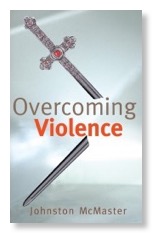
To look at, and possibly buy, a copy of Dr. McMasters book, 'Click' the cover below (this will open in a new window):
For a Book Review, just 'Click this link (which will also open in a new window)
