Speaker for 14th February 2017
Coleraine Probus look into a 'ShelterBox'
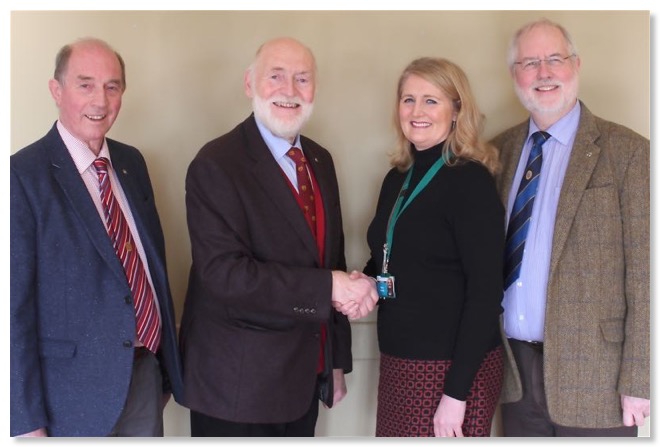
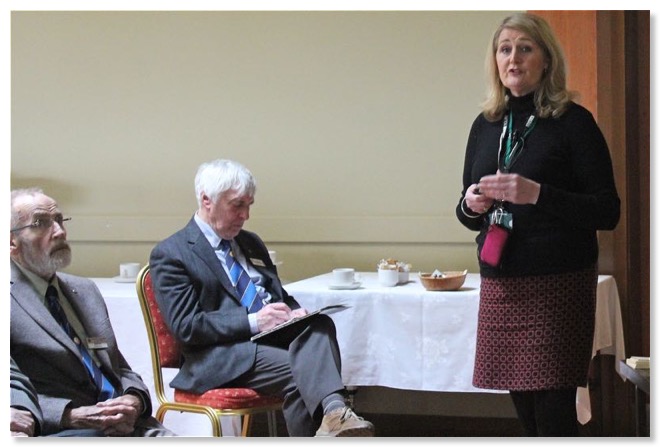
At our 14th February meeting Coleraine Probus members were recently taken to the world of international disasters and the rapid response teams that first arrive to help with the rescue work. Fortunately the members didn’t have to leave home, guest speaker Maria McGilly journeyed from the Armagh Rotary club to give some graphic accounts of these terrible events of nature or conflict, and what the emergency workers needed help with most.
Rotary International is working in partnership with a charity called ‘ShelterBox’. The aim of the charity is a fairly simple on, by providing emergency shelter and tools for families when their homes have been taken from them by disaster, they can change despair into hope. When rapid response teams get to a disaster area they know what the first priority is – get those affected out of danger and into shelter. The rescue teams take with them a stock of the ‘ShelterBox’ kits. These plastic metre size cubes hold everything to help families in the initial post emergency period, while the extent of the incident is calculated and international aid starts to get underway. (For a look at what a typical box contains,'Click' this link)
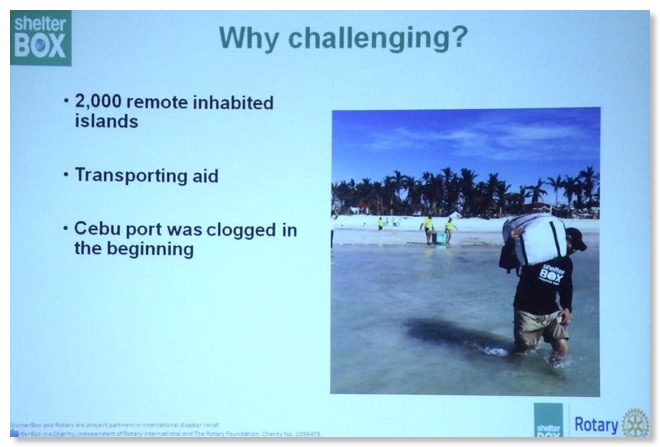
The boxes themselves are warehoused in vulnerable areas throughout the world, the idea being that they can be distributed to a local emergency area fairly quickly. In Maria’s presentation she had some video and photographs showing the practicalities and ‘challenging’ difficulties of getting the boxes to where they are needed most and as quickly as possible. The fairly recent emergency in the Philippines involved trying to find the point of delivery for the emergency kit, when there are over 2,000 inhabited islands within the Philippine area.
The 2014 Nepal monsoon flood took out villages and roads, as well as leaving the rivers un-navigational. The answer was to carry the boxes; several hundred were required; slung below a pole carried by two relief workers or local Sherpa. Hurricane Mathew in Haiti, the conflict in Syria and Iraq as well as the Cameroon were other areas where ‘ShelterBox’ help has been given.
Needless to say, these life saving boxes cost money – about £600 each – and that is where Rotary comes in. Through the worldwide network of Rotary clubs, they can promote the partnership with ‘ShelterBox’, getting donations and promises of help as well as volunteers within the clubs themselves or by giving talks, like the one to Coleraine Probus.
A rather sobering point that Maria had to make, was that in many areas where ‘ShelterBox’ had delivered their emergency kit, the harsh environment put a great deal of ware on the fabric of the tents. These would have to be replaced after three or four years, yes 3 – 4 years! Long, long after the news media and most ordinary people had forgotten about ‘that’ particular disaster, people were still dependent on the emergency help given to regain ‘hope’, and surely without that hope, how could they have survived.
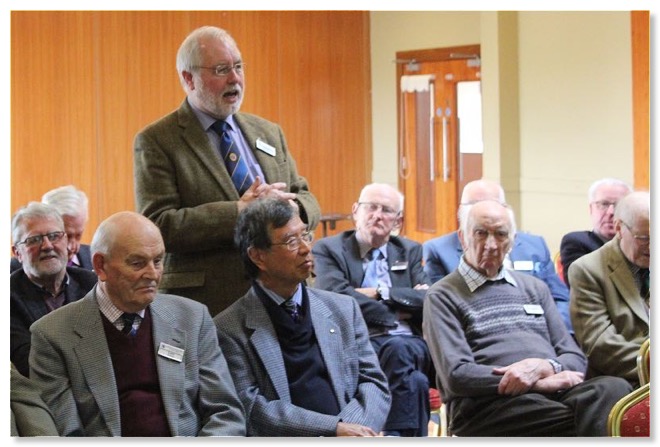
The talk given by Maria was particularly well received by the Probus members, and they were equally interested in looking into a ‘ShelterBox’ for real, as Maria had managed to bring a demo box with her – another ‘challenging’ delivery, from Armagh to the Golf Club first floor, when the lift was being serviced!
For more information about ShelterBox, just 'Click' on the link below (which will open a new window):

For some more images from the meeting, 'Click' the camera below