Speaker for 17th September 2019
Coleraine Probus takes a look at Rathlin Island
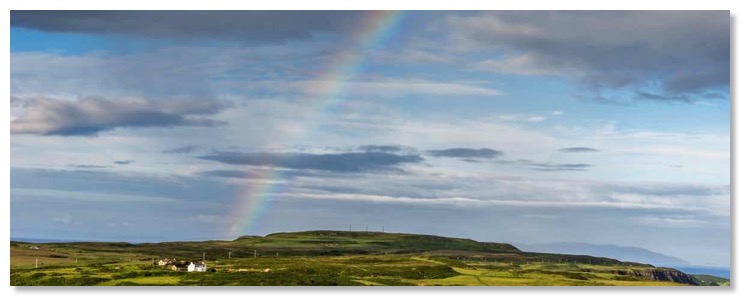
Club members were treated to a spectacular visit to Rathlin Island, when James McDowell came along to talk about being a wild life and RSPB volunteer on the Island, and also to show some of the unique photos he had taken there.

The New Ferry, heading home from Rathlin
James started his talk with a reminder about just how important Rathlin is, especially for bird life. From April until early September countless numbers of birds nest, rear and feed their young on and around the island. This attracts over 24,000 tourists and bird watchers during that short season. The ferry (with their new boat) is kept busy, especially when the sun shines! The popularity of the birds and their main nesting area around the Western side of the island, sometimes detracts visitors form other parts of the island, its wildlife, landscape and history. James began his tour of the island from the Eastern side.
The East Lighthouse was built in 1924 and the rocks around this imposing structure are home to many 'Common' and 'Grey' Seals. If you visit this part of the island early on a misty morning, the Seals can be heard calling, a sound very much like a whole group of fog horns being blown together. Not far from the lighthouse is 'Bruce's Cave', the legendary refuge for Robert the Bruce before his famous return to Scotland - although there may not be too many spiders to be seen! This side of the island is also the home of the Rathlin Red Hare and the very rare 'Golden Hare', unique to the island.
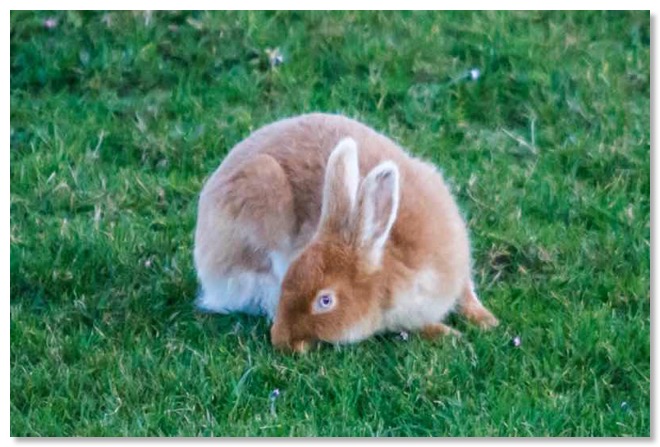
The unique and very rare 'Golden Hare'
Sheep, Cows and Fishing are the main sources of work for the Islanders, as well as feeding the tourists and the recently established, eatable Kelp enterprise. James assured the members that the 'Kelp Pesto' is surprisingly good and not as 'salty' as people imagine!
Power to the island is via a mains cable from the mainland around Ballycastle. The island did have some wind turbines, which seemed a good idea, but the winds may have been too strong as (we're told) they where blown down!?

Bird Watching! Yes, the birds are the grey mass on the rocks
James next turned his photographic attention to flora of Rathlin and many of its beautiful native plants, especially the wild orchid, which blooms almost un-noticed by the tourists making their way to the RSPB site at the West end of the island. It is here the second Rathlin lighthouse can be found, the 'Upside-down Lighthouse' as it's called with its light nearer the sea and access to the light from above, along the cliff face. The lighthouse was constructed between 1912 and 1917, requiring huge amounts a concrete to make a stable base
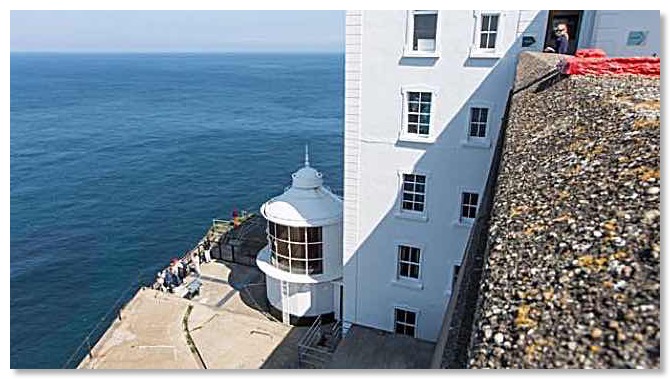
The 'Upside Down Western Lighthouse'
From the viewing platform, and with the aid of the RSPB staff and volunteers, the visiting seabirds and their nests can be seen filling the cliff face. There are also many thousands of Guillemots, who do not make a nest, but prefer to lay their eggs directly on to narrow rock shelves, crowd on to the rugged cliffs.
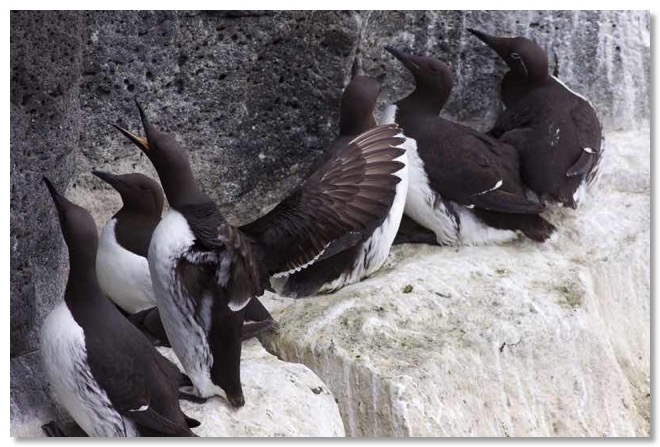
Guillemotts 'Nesting' on the cliff face
Thanks to the RSPB, visitors can use the powerful binoculars and telescopes on loan at the viewing site to see close-up to many of the different species who make the West of Rathlin their home for a few months every year. In general the binoculars are focused nearer the base of the cliffs, as it is there that 'everyone's favourite' bird, the 'Puffin' with (believe it or not) they're young, called a 'Puffling', can be found.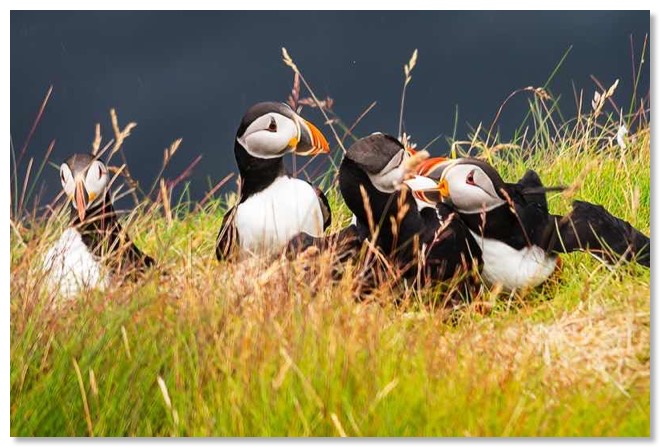
The Puffin
James talk and beautiful slide show was thoroughly enjoyed by the members, and got everyone thinking about next Spring with a possible trip, over the sea to Rathlin and take a look at that island, with it's 'Pufflings' in a different light, all thanks to James's tour of somewhere so near, yet so different.

