Speaker/Visit for 26th February 2019
Coleraine Probus visit the Lifeboat Station in Portrush
Making a change to their usual routine, club members went to visit the 'Speaker of the week' at his work, for a recent club meeting. The man in question was Fred Williams and his work (as a volunteer) was at the Portrush RNLI Station. Fred, who has been involved with the RNLI for more years than he likes to think of, told a detailed and fascinating story of the history and work of the lifeboats in Portrush.
The first lifeboats based at Portrush came in 1860. They were sturdy rowing boats and were crewed by very brave volunteers - when club members reflected on what the sea conditions could be like on a stormy night off Ramore Head, they certainly had to be 'very brave'!
In 1902 the lifeboat station at Landsdowne was opened, and housed the lifeboat 'Hopwood', a row and sail boat that could be from the station slipway instead of being man-handled over the beach/rocks as earlier rescues began. It was in 1924 when the first powered lifeboat arrived, but it had to be moored in the harbour as there was no way of getting it in or out of the Lifeboat Station.
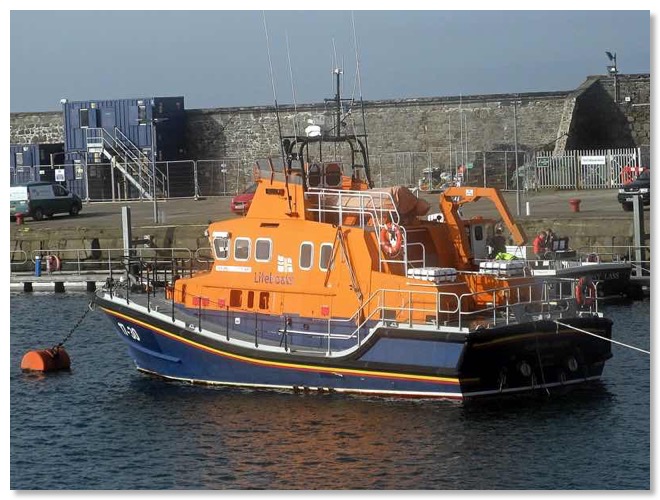
All quiet but ready to go if needed. Our current Lifeboat in the Harbour.
The 'Lady Scot' arrived at Portrush in 1949, and this was the first craft that could be kept in and launched from the new boathouse at the harbour. In later years, it was this lifeboat that Fred first trained on, and he has been a constant member of the crew in various boats, for many years now.
The Lifeboat Station is now the home for the insure rescue FAB boat - that's "Fast Afloat Boat' - the orange inflatable craft that we often see whizzing around harbour and bay areas. The current sea rescue lifeboat is moored in the harbour. This is one of the newer 'Seven Class' of 'self-righting' craft that can tackle some of the very worst sea conditions. It takes a crew of 6 (plus a Doctor if required), is very fast and at top speed burns about 2 gallons of diesel every MINUTE. Yes, the boat is expensive to run and to buy - around £2million for every boat. The Portrush boat has '17-30' painted large on it's bows. That's not its name that denotes it as a 17metre long boat and number 30 of its design off the production line. The working life of a typical Lifeboat is around 25 years. They are popular to buy and re-fit, for holiday cruising for the rather 'well heeled' boating enthusiast.
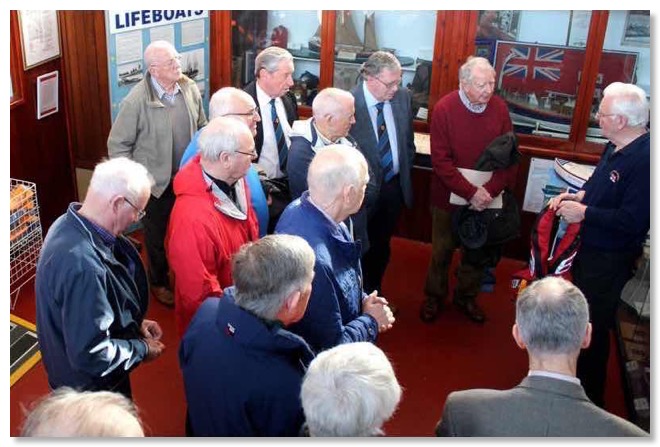
Listening to Fred, it's a serious moment and about costs!
Money and where it comes from was the big question the club members asked Fred. Yes, it was expensive to buy and run the lifeboats, and the whole RNLI. In fact it costs £500,000 EVERY DAY to keep the RNLI's services running throughout the UK and Ireland. A staggering amount by anyone's reckoning!
Fred explained that 70% of the Institution's income comes from legacies, bequeathed by numerous families and institutions (but for club members this was in itself a surprisingly huge amount). Volunteers, visitors and well wishers manage organise, run and work hard at projects to raise around 30% of the daily costs. The our government contributes 0% of the costs, on behalf of a grateful nation for the lives saved and the perils faced.
For a look at some more photos from the visit (thanks to Ken's Kamera, and also Des and our WebEd), click on the small lifeboat painting below.
If you would like to find out a bit more about the RHLI, just 'Click' the flag below (this will open in a new window).